How to Choose Your Jewelry Box Material: Velvet vs Microfiber vs PU Leather vs Paperboard
Most buyers choose a jewelry box material from a photo. They pick velvet because it looks rich, or PU leather because it looks clean — and they find out what is wrong with it only when the sample arrives.
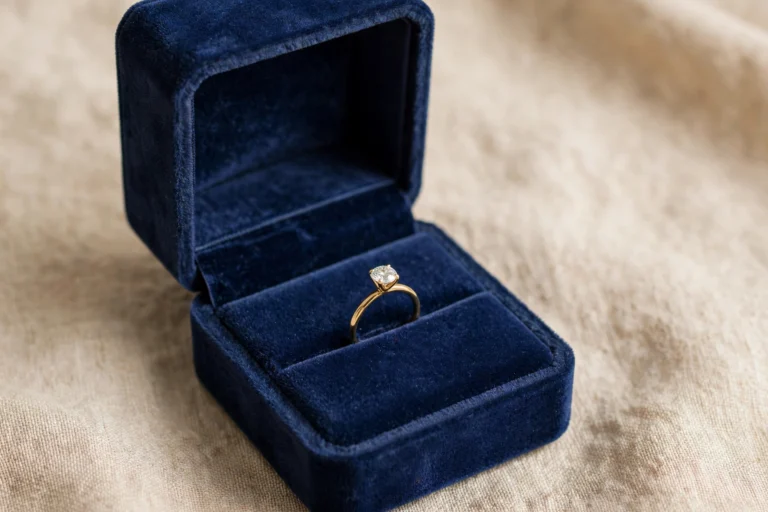
A velvet jewelry box is the classic example. The lid keeps a pale mark from stacking, dark lining sheds lint onto a silver chain, and the gold foil logo comes out soft at the edges. None of that means velvet is bad. It means velvet was put in the wrong place.
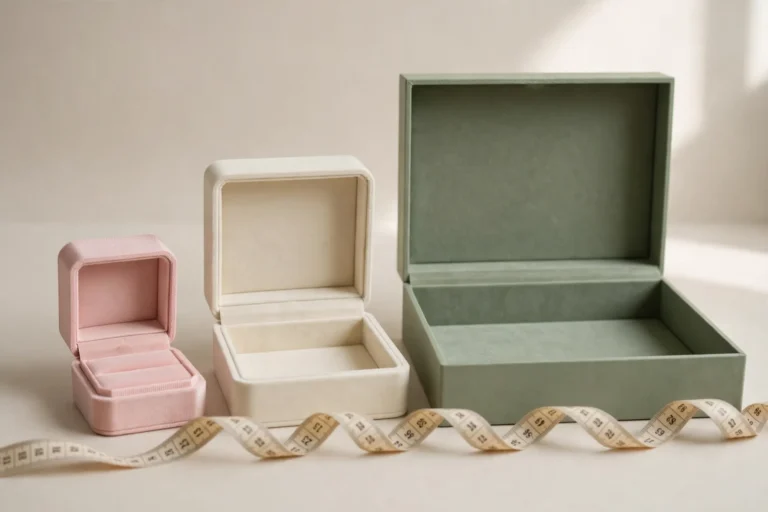
Here is the part most guides skip: a jewelry box is not one material. It is four layers — shell, covering, lining, insert. This guide shows how to choose jewelry box material by surface, not by name.
The four materials at a glance
| Material | Where it belongs | Feel | What goes wrong | Best for |
|---|---|---|---|---|
| Velvet | Lining, inserts | Soft, deep, warm | Lint, dust, pressure marks, soft foil | Rings, bridal, gifts |
| Microfiber | Lining, inserts, trays | Smooth, suede-like | Thin if low density | Everyday, silver, travel |
| PU leather | Outside, lids, cases | Smooth, firm, wipeable | Peels at corners if thin | Watch boxes, travel |
| Paperboard | Shell under every cover | Light, stiff, prints well | Crushes at corners, swells if wet | Retail, mailers |
Velvet jewelry box: the classic look, and where it lets you down
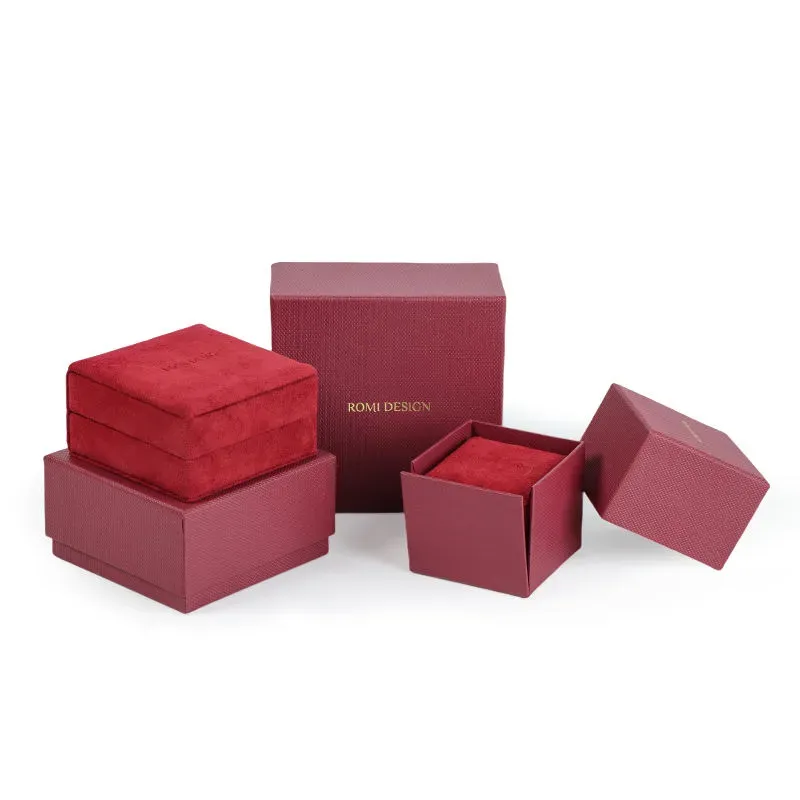
Velvet is still the first choice when the box has to feel like a gift. The short pile soaks up light, so gold looks warmer and a diamond looks brighter against it. For a ring box or a bridal set, nothing else gives the same first ten seconds.
But velvet is the hardest material to control in bulk. Dark velvet sheds lint, and a foil logo stamped on velvet comes out softer than the same logo on PU leather, because the pile gives way under the stamp.
Test it before you order. Ask for a sample in your exact colour, rub the lining with a white cloth, and check whether colour comes off.
Microfiber: the quiet, steady choice
Microfiber looks like suede, feels smooth, and behaves the same from box to box. It does not shed lint the way velvet does, it wipes clean with a damp cloth, and a foil logo stays sharp on it.
Its weakness is the opposite of velvet’s. Cheap microfiber feels dry and thin, and a thin lining makes the whole box feel cheap even if the shell is solid. Press the lining with your thumb. If it feels papery, ask for a denser grade. In the velvet vs microfiber jewelry box lining question, microfiber wins when the box will be handled every day — in a store, on a counter, or in travel. The same microfiber lining goes into our Velvet Jewelry Display Trays, where pieces are lifted out and put back all day.
PU leather: best on the outside, not the inside
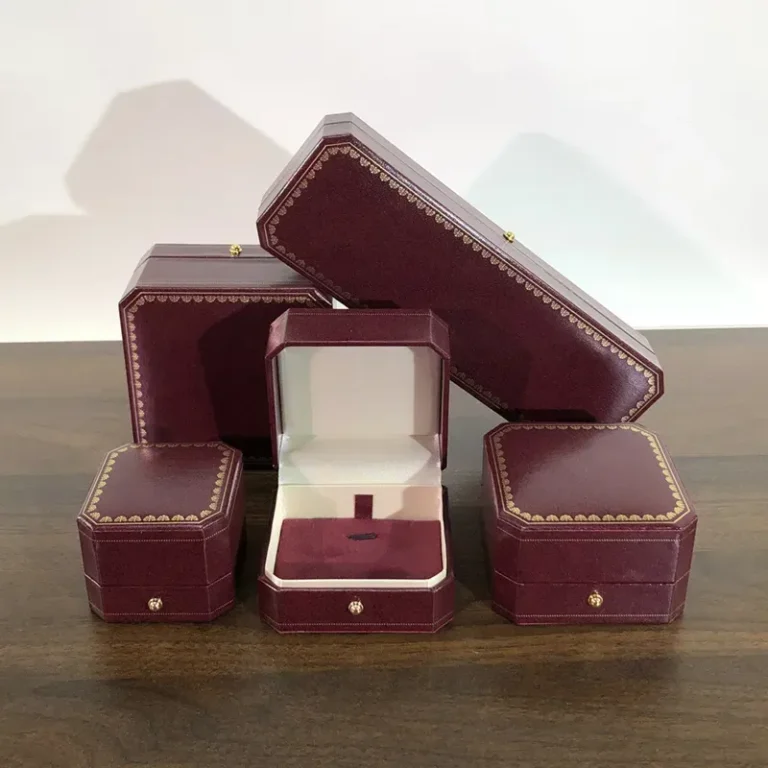
PU leather is a polyurethane coating pressed onto a fabric base, with a grain pattern pressed into the coating so it reads as leather. It is the most forgiving outside material we work with. It wipes clean and holds a sharp foil stamp or a clean deboss.
Put it in the wrong place and it fails. A PU leather tray floor shows every fingerprint, and a smooth surface lets a piece slide where a soft nap would have held it. PU leather jewelry box peeling almost always starts at a folded corner — the coating was thin, or the corner was folded too tight. When you compare two quotes, ask whether the supplier means PU or PVC. The two do not age the same way.
Paperboard: the part you never see, and the part that breaks first
Every box in this article has paperboard inside it, even the velvet one. Rigid greyboard is the shell that gives a luxury box its weight and square corners. Paperboard takes print better than any other material here.
Paperboard fails in shipping, not on the shelf. Corners crush when a carton is stacked too high, and a board that gets wet swells and never goes back. Press one corner of the sample hard with your thumb. A good rigid board resists; a weak one gives way.
If you want an FSC label on the box, say so before the order starts. FSC board is per-order paperwork, and the label covers the board — FSC 100%, FSC Recycled or FSC Mix — not the whole finished box. The FSC label page explains the three labels.
Which combination fits your jewelry?
| Your jewelry | Outside | Lining | Why this split |
|---|---|---|---|
| Rings, bridal | Velvet / PU leather | Velvet / microfiber | Soft grip holds the ring upright |
| Necklaces | Printed board / PU | Microfiber + hook or card | Flat surface stops tangles |
| Silver | PU leather / board | Microfiber + anti-tarnish | Untested dye speeds tarnish |
| Watch, gift sets | PU leather | Microfiber | Wipeable outside, clean inside |
| Retail, mailers | Printed board | Card / foam insert | Light, cheap to ship |
Check your sample in five minutes
Do not approve a bulk order from a photo. When the sample arrives, run these five checks.
- Rub the lining with a white cloth. If colour comes off, the dye lot is wrong.
- Press the lid and the corners. A good shell springs back. A weak one stays dented.
- Open and close the lid twenty times. It should feel the same on the twentieth close.
- Look at the logo under a lamp. Foil on velvet softens; foil on PU leather and microfiber stays sharp.
- Smell the box. Glue and cheap PU leave a smell that does not fade in the carton.
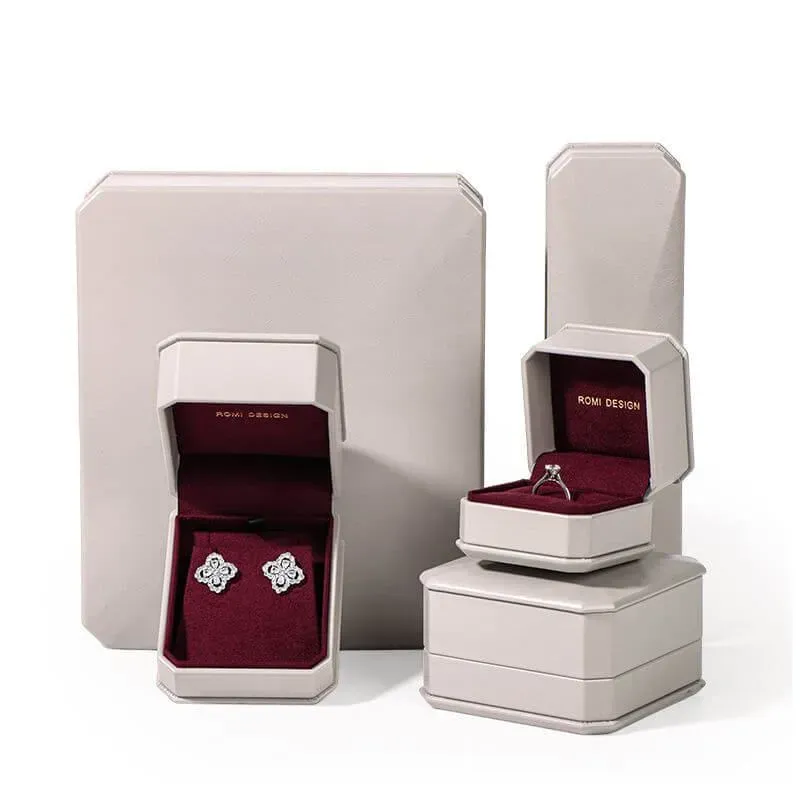
If any check fails, say so before the bulk order starts. A sample costs little. A 500-piece reorder of the wrong material costs the whole order.
How to order it
Start with the jewelry, not the material. A ring needs a soft grip. A chain needs a flat surface. A box needs a strong shell. Pick the material for each surface, then ask for one sample in your exact colour, with your logo.
That is how a velvet jewelry box, a microfiber jewelry box, a PU leather jewelry box and a paperboard jewelry box from the same workshop can feel like four different products. Choosing a custom jewelry box material is not about finding the best material. It is about putting the right material on the right surface — then proving it with a sample.
Custom jewelry boxes start at 500 pieces per style, and stock designs start at 10. A physical sample takes 7–10 days, and bulk takes 15–25 days, with REACH and SGS testing available on request.