Jewelry Display Ideas for Retail: One Counter That Turns Browsers Into Buyers
Most guides to how to display jewelry for sale come as a list of twenty props. A shop does not need twenty props. It needs one counter a customer can read in five seconds: one piece that stops them, one tray that holds the rest, and one stand that shows how the piece sits when it is worn. Start with that counter.
Jewelry display ideas for retail: set one counter first
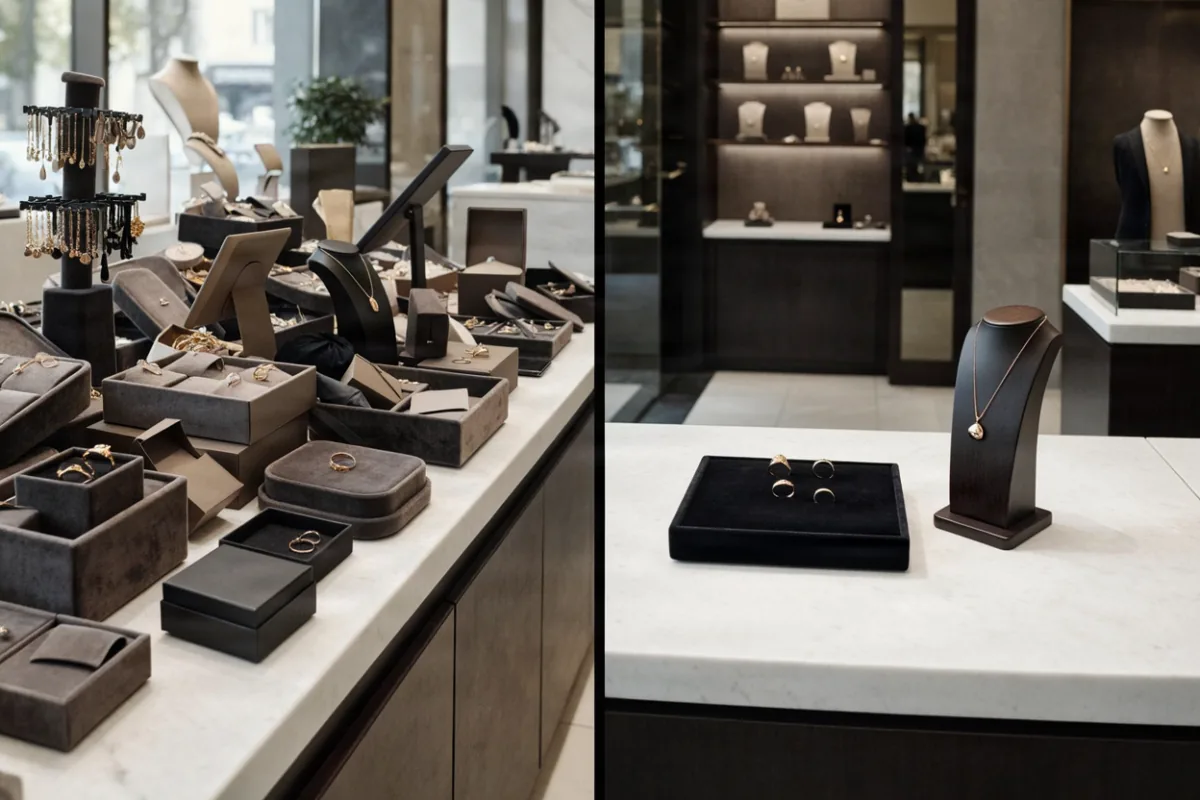
How to display jewelry on a counter comes down to one rule: a retail jewelry display works when the eye lands in one place, then moves in one direction. Hero piece at eye level, slightly left of centre, nothing taller behind it. Tray to the right, low and flat. Stand behind the tray, so a necklace or bracelet stands upright while the pieces for sale lie flat in front.
| Zone | What goes there | Why |
|---|---|---|
| Left, eye level | Hero piece, one only | What the customer remembers |
| Centre, low | One tray, one set | What they pick up and compare |
| Right, behind | One stand, one piece | How the piece sits when worn |
| Front edge | Nothing, or one price card | A clear edge to reach over |

How to make a hero piece stand out is not a taller stand. It is everything else staying lower and quieter. Pick the piece customers ask about and let the tray carry the rest. Most jewelry counter display ideas add props. This one takes them away.
Tray or stand: match it to the piece
A tray and a stand do different jobs. A tray holds pieces flat so a customer can see a set together; a stand lifts one piece up so a customer can see how it hangs.
| Piece | Tray or stand | What to watch |
|---|---|---|
| Rings | Tray, slots or pads | Rings roll. A slot beats a flat pad |
| Stud earrings | Tray, card or pad | Keep each pair in its own slot |
| Drop earrings | Stand, low hook | Drops need to hang to show length |
| Short necklace | Tray, laid straight | Lay it straight, clasp at the back |
| Long necklace | Stand | A long chain needs height |
| Bracelet / bangle | Stand or tray roll | On a roll, it looks like it fits a wrist |
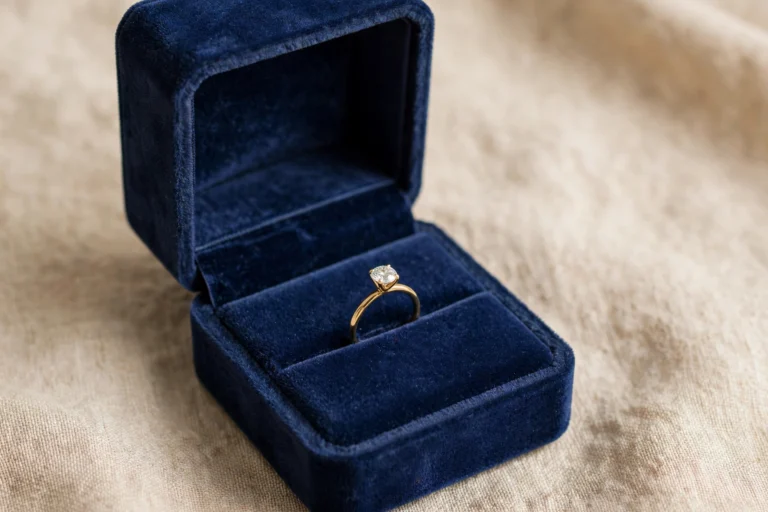
Velvet jewelry display trays work for most of this because the surface grips the piece instead of letting it slide, and the colour stays quiet behind the metal and stone. A tray that lets a ring roll to the edge costs you a sale. The same test applies to jewelry display stands for retail — if the stand wobbles when a customer touches the piece, it is the wrong stand.
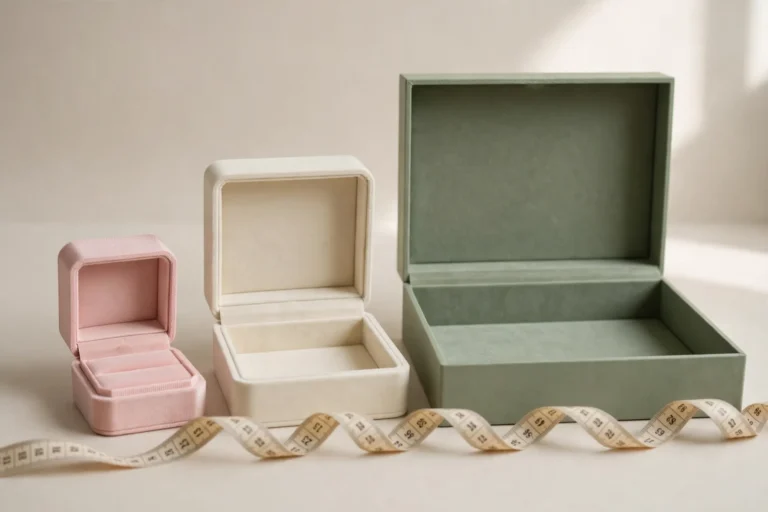
When you order, send the piece with the order. A slot drawn around a wide band will not hold a thin band. We draw tray slots around the actual piece measurements, the same way we draw box inserts.
Light, height and empty space
Light needs one check, not a technical explanation: can the customer see the stone clearly from where they stand, without a reflection hiding it? Put the light in front of the piece, not above it, and angle it so it hits the stone and not the glass. If you can see your own reflection in the glass where the stone should be, move the light, not the piece. That check covers most jewelry display lighting problems, and it costs nothing to try.
Height is the same kind of check. A stand that is too tall puts the pendant above eye level. A tray that is too deep puts the rings at the bottom of a well. Keep the hero piece at eye level and the stand just high enough that the pendant hangs free.
Empty space is not wasted space. A clear patch between the hero piece and the tray reads as one shop selling one set; no clear patch reads as a market stall. Leave one hand’s width empty between zones and the front edge clear. The same rule works for jewelry display for craft shows and for jewelry display for a small store.
What to change first if nothing sells
Do not change everything at once. Change one thing, watch it for a week, then change the next — that is how jewelry display ideas for small business are tested. Look but don’t stop: move the hero piece, or swap it. Stop but don’t pick up: the tray is too full — take half out. Pick up but put back: the price is not visible — put one price card where the hand lands. Looks good in a photo but not in the shop: check the light from the customer’s side. The same sequence fits jewelry display ideas for boutiques, where one counter is often the whole shop.
How to display jewelry in a store comes down to that order: one hero piece, one tray, one stand, light from the front, and room for a customer to reach in. Get the counter right first, then buy more to match it.
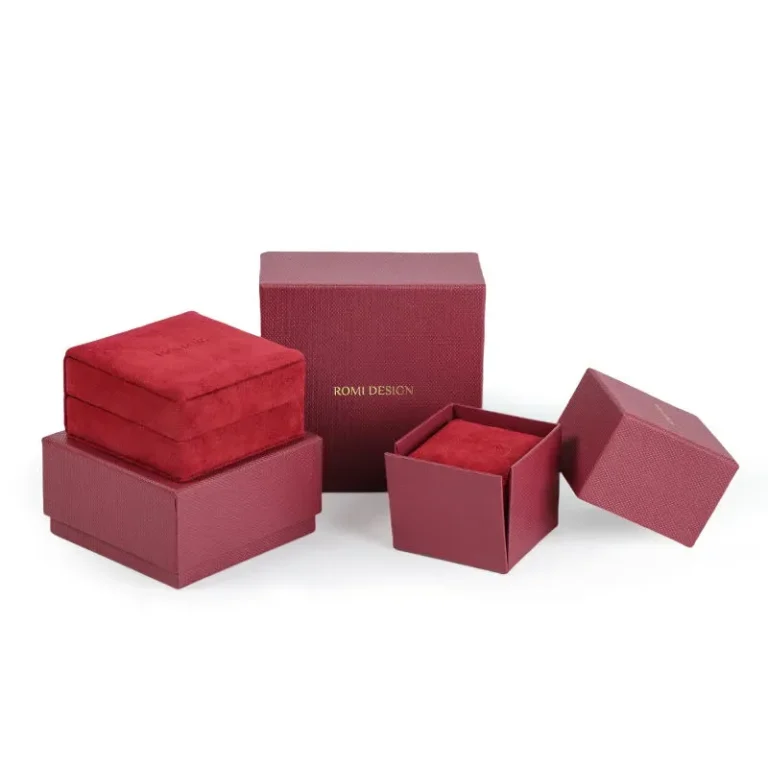
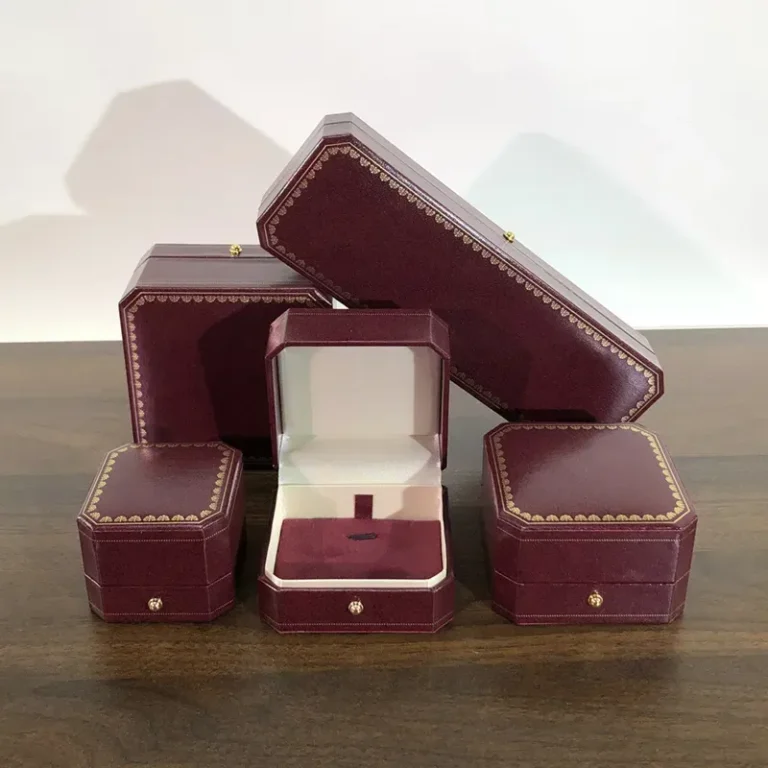
We make custom jewelry boxes and display trays in our own workshop in Dongguan. Custom boxes start at 500 pieces per style; stock designs, trays and stands start at 10. Samples take 7–10 days, bulk takes 15–25 days, and every order is inspected three times before it leaves. Send the piece and we match the tray slot and the box insert to the same measurements, so what the customer sees on the counter is what they take home in the box.
That is the point of good jewelry display ideas for retail: the counter sells the piece, the tray and the stand show it honestly, and the box it goes home in fits it exactly.