Eco-Friendly Jewelry Packaging: What Actually Makes a Box Recyclable?
Eco-friendly jewelry packaging is not one material, and it is not one label on the lid. A box made from recycled board can still end up in general waste, because the wrap, the lining or the insert stops it being recycled.
Judge a pack in three parts — the shell, the insert, and the pouch or tissue. Check each part on its own, and if one part cannot be recycled, say so, and say what would change it.
The shell decides most of it
The shell is the box itself: board, wrap and finish. A plain kraft or uncoated board box, printed with water-based ink and no lamination, is usually straightforward to recycle where paper recycling is collected.
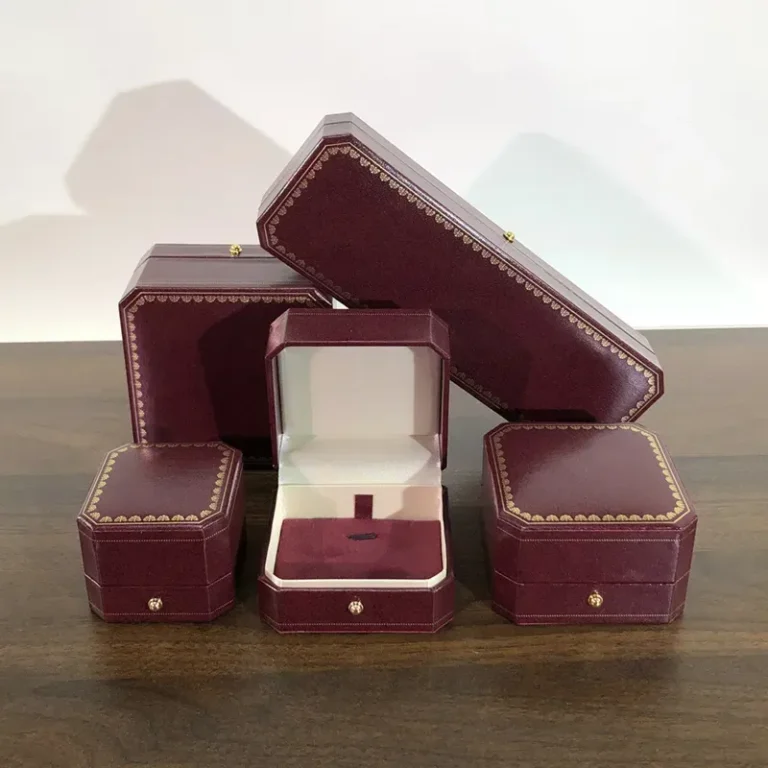
The problems start with the finish. Foil stamping, metallic lamination and plastic lamination look good on a shelf, and they are the usual reason a box is rejected at a paper mill — a thin plastic film over the whole box means the board underneath cannot be separated easily.
| Shell choice | What happens at recycling | When to use it |
|---|---|---|
| Uncoated paperboard, no lamination | Board can go with paper recycling in most places | Everyday retail and mailer boxes |
| Coated board, light print | Usually recyclable, check local rules | Branded boxes where colour has to stay sharp |
| Foil-stamped logo on uncoated board | Small foil area is usually tolerated; a full foil cover is not | A logo, not a full metallic wrap |
| Full metallic or plastic lamination | Board is hard to separate from the film | Display boxes where the finish matters more than recycling |

A foil logo on an otherwise plain box is a different decision from a box laminated all over — tell the buyer which one they are getting.
The insert and the pouch are separate decisions
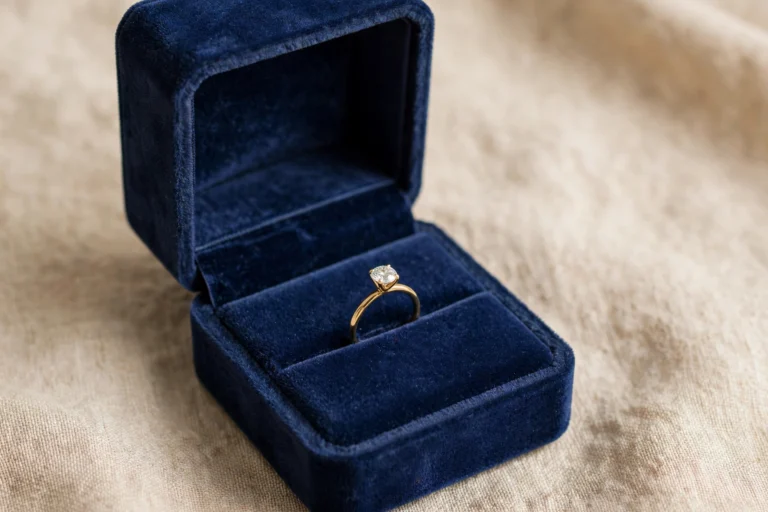
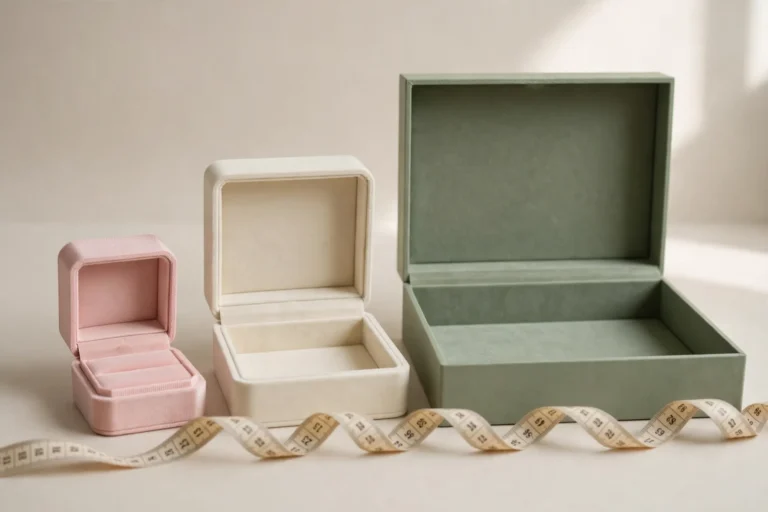
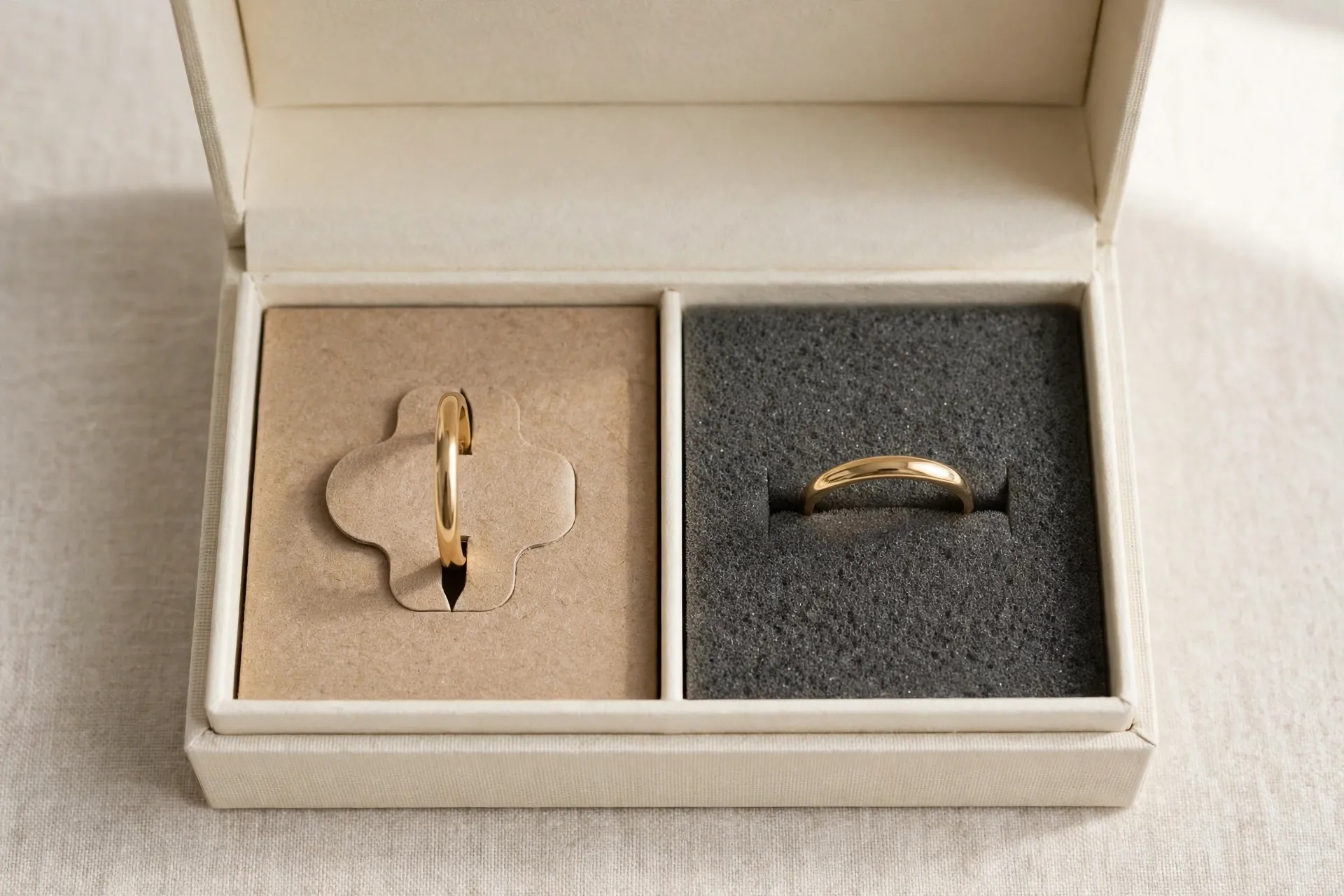
The insert is often the least recyclable part of the pack. A cardboard insert, cut to the piece, can usually go with the box. A foam insert cannot, in most household recycling. A velvet-covered insert — the same build as our velvet display trays — sits in between: the board underneath may be recyclable, but the fabric has to be removed first, and most buyers will not do that.
The same split applies to the pouch and tissue. A cotton pouch can be reused — a real benefit — but it is not paper recycling. Tissue paper is usually recyclable if it is uncoated and not glittered. A plastic zip bag is not. For recyclable jewelry boxes, this three-part check is the whole job.
| Part | Recyclable in most places | What to ask |
|---|---|---|
| Cardboard insert | Yes, if uncoated and unlined | Is it plain board, or covered? |
| Velvet-covered insert | Board only, after the fabric is removed | Can it be made in plain board instead? |
| Foam insert | No, in most household recycling | Will a card slot hold the piece? |
| Cotton pouch | No, as paper; reusable as a keepsake | Is the pouch the keepsake, and the box the recyclable part? |
| Uncoated tissue | Yes | Is it printed with metallic ink? |
FSC labels, in plain language
FSC certified jewelry packaging starts with the board, not with the finished box. The Forest Stewardship Council explains its three labels in plain terms: FSC 100% means all the forest material comes from responsibly managed, FSC-certified forests; FSC Recycled means the product is made from 100 per cent recycled material; and FSC Mix means a mixture of certified, recycled and controlled wood. The label on the box should match the board actually used for that order.
Ask whether FSC-certified board is available for your order, which label would apply, and whether you can see the paperwork for that batch — if a supplier cannot show it, do not print the label.
Do not assume a box is recyclable because the board is certified. Certification is about where the forest material came from. Recyclability is about what was done to it afterwards: the wrap, the lamination, the glue and the insert. Recyclable is also not the same as biodegradable or compostable — a box can break down in a composter and still not be recyclable.
What to ask a supplier to prove
Before you pay for a sample, ask four questions and get the answers in writing.
1. What is the board, and what is on it? Ask for the board type, the wrap, and whether there is lamination or a plastic coating — if the answer is “eco board,” ask what that means for this order.
2. What is the insert made from? Ask whether it is plain board, fabric-covered board, or foam, and whether a board insert would hold the piece just as well.
3. What proof comes with the order? For FSC-certified board, ask for the label that applies and the chain-of-custody paperwork for that batch. For safety testing, REACH and SGS testing are available on request — ask for a report by name, and check it names the material tested, not just the finished box. SGS lists REACH, testing, inspection and eco-design among its services for the jewelry sector.
4. What should the end customer do with it? Ask the supplier to say, in one sentence per part, whether it goes in paper recycling, general waste, or back for reuse — if they cannot say, the pack is not ready to be called recyclable.
Eco-friendly jewelry packaging: what we can and cannot claim
We make custom jewelry boxes in our own workshop in Dongguan. Custom designs start at 500 pieces per style; stock designs start at 10 pieces per style. Samples take 7–10 days, bulk takes 15–25 days, and every order is inspected three times before it leaves. For eco-friendly jewelry box wholesale orders, we can build the pack the way this article describes: uncoated or lightly coated board where the customer wants it, a board insert cut to the actual piece, and a finish chosen with recycling in mind.
What we cannot do is call a box FSC-certified, or recyclable, on one material alone. The label depends on the board supplied for that order and the paperwork that comes with it. If you want either claim on your box, tell us before sampling, and we will say what is possible for that order and what proof comes with it.
That is the difference between sustainable jewelry packaging as a label and as a pack that holds up when someone asks how it works. Check the three parts, ask for the paperwork, and keep the finish honest.